
Counseling vs. Coaching: What’s Actually Different in the Room?

Kindly Note:
This post includes references to laws and regulations that may change over time; it was last reviewed in July 2026. References and sources are linked at the bottom of the post.
Okay, you're sitting across from someone offering support, and they're calling it "coaching."
But then you meet someone else offering nearly identical support, and they call it "counseling"…?
Same price point. Similar conversations. But different labels. So what's the actual difference?
Or, more plainly, if you're paying the same or a similar amount, why make such a big fuss about a name?
Here's where things get messy. The coaching industry has grown rapidly. In 2025, it was valued at over $16 billion in the U.S. with 232,000+ active coaches (LIFE Coaching Certification, n.d.). Coaching certification programs range from weeks to many months, even years. Meanwhile, clinical mental health counseling requires a master's degree, 3,000 supervised clinical hours, a national exam, and state licensure (Washington State Department of Health, n.d.). More on that below.
At Jupiter Pines Counseling, we offer both services, clinical mental health counseling and coaching, but they're always separate. For every clinical service we provide, we typically offer a comparable coaching option as a distinct engagement. We do not blend counseling and coaching in the same appointment; each service has its own scope, documentation, and boundaries. We're not about gatekeeping or dismissing excellent coaches who are out there doing quality, harm-free work with clients; hell no!
In this post, I’ve set out to tell you the truth about how these two service offerings (and industries) differ and why those differences matter, especially when you're dealing with complex needs and potentially vulnerable communities (e.g., digital trauma, eco-anxiety, chronic pain, religious trauma, or workplace exhaustion).
So let's roll up our sleeves, cut through the noise, and talk about what actually happens when you sit down for each type of support. Read on!

Principal Clinician & Coach at Jupiter Pines

The Functional Differences Between Counseling & Coaching
What Does Each Type of Session *Actually* Look Like? Here’s What Goes Into a Clinical Counseling Session…
Note: Jupiter Pines Counseling clients sign counseling policies prior to beginning any counseling appointment. We value transparency; as such, the latest .pdf version of these policies is available to preview here.
A client’s first counseling session begins with an initial clinical assessment. Your licensed counselor takes a thorough intake, exploring your history, symptoms, goals, and any relevant medical or psychiatric context. At Jupiter Pines Counseling, this clinical assessment is intentionally structured to feel very conversational for the client, less like a formal, stuffy interview.
After your intake appointment ends, your counselor completes what often becomes a substantial amount of documentation to ensure your client's file adheres to health insurance-approved clinical formatting within our electronic health record system. We do this for liability, licensing, and general professional compliance reasons.
From there, your clinician might develop a formal treatment plan. This is also known as a clinical roadmap, and it contains measurable objectives and progress indicators. This treatment plan is also written in a clinical format approved by insurance providers.
Depending on your clinician’s training, your intake session and ongoing counseling sessions might draw upon evidence-based modalities like cognitive behavioral therapy (CBT), dialectical behavior therapy (DBT), narrative therapy (NT), psychodynamic therapy (PD), eye movement desensitization and reprocessing (EMDR), somatic experiencing (SE), or other trauma-informed approaches. The work often involves processing past experiences, understanding how those experiences shaped your nervous system and coping patterns, and building new skills from a foundation of extensive clinical understanding.
Counselors operate under legally binding ethical codes with mandated reporting obligations (e.g., suspected abuse of children or vulnerable adults). Everything you discuss is protected by confidentiality laws (e.g., HIPAA), with exceptions clearly defined by statute.
All of this is really good news for a counseling client because they have protection through their local department of health. For instance, in Washington State, if something goes wrong between a client and their therapist, that client always has the right to report their therapist to the Washington State Department of Health.
Here’s What Goes Into a Coaching Session…
Note: All coaching clients of Jupiter Pines sign our coaching agreement prior to beginning any coaching appointment. We value transparency; as such, the latest .pdf version of our coaching agreement is available to preview here.
A coaching session is typically more forward-focused and goal-oriented; the coaching profession overall has fewer restrictions and fewer formal professional accountability measures to protect clients. In coaching sessions, you might start by identifying a specific outcome, like launching a career pivot, navigating a college transition, improving communication patterns, or channeling climate concern into action. The coach might help you clarify what you want, identify obstacles, brainstorm strategies, or create an actionable plan.
Coaching sessions often emphasize accountability and momentum (e.g., “what did you commit to last time, what happened, and what's next?”). Coaching typically draws on a client’s strengths and future vision rather than a clinical assessment or diagnosis. It can be incredibly effective for people who are emotionally stable, self-aware, and ready to move (HPSO, n.d.).
Coaching relationships are contractual but not legally regulated. There's no state board to hold the coach accountable for misconduct, no mandated reporting framework, and no standardized confidentiality protections.
Recognize yourself in one of these descriptions? Book a complimentary 20-minute consult here; we'll help you determine which service fits your current needs.
Please Note:
If you've ever been harmed by a clinician, medical provider, coach, or therapist and you'd like support navigating the reporting process, we're here to help.
Filing a report with the Washington State Department of Health is your right as a client. While Jupiter Pines Counseling cannot guarantee investigation outcomes or provide legal advice, we can offer compassionate support to initiate the process, help you document what happened, and connect you with resources for counseling support while you navigate this challenging time (e.g., support groups exist!).
If you're considering reporting a past clinician and would like guidance on what to expect, book a complimentary 20-minute consult. Even if you’re not interested in becoming a Jupiter Pines client, we're still happy to use these 20 minutes to walk through your client rights in WA State, answer initial questions, and help you determine what feels safest and most empowering for you. This is part of our professional pledge and contribution to the community!
Important Disclaimer: This offer for a complimentary 20-minute consult is distinct from ongoing clinical counseling. If you're also experiencing emotional distress, trauma symptoms, or mental health challenges from a harmful experience, clinical counseling is available as a separate, parallel service to support your healing journey.
Things a Licensed Counselor *CAN* Offer You
(Things That a Coach *CANNOT* Offer)
Not every personal challenge requires clinical intervention. But when it does, the legal and structural differences become critical. Here's what only a licensed clinician can provide:

Clinical Counselors vs. CoachesClinicians can issue a clinical diagnosis (e.g., Major Depressive Disorder, PTSD, ADHD, ASD, Generalized Anxiety Disorder).
Coaches cannot diagnose or assess for mental health conditions.
Clinicians can provide a superbill for health insurance reimbursement.
Coaches cannot issue health insurance documentation.
Clinicians can write a recognized letter of workplace accommodation (covered by the ADA).
Coaches cannot authorize legal accommodations.
Clinicians can submit clinical documentation for disability leave or FMLA.
Coaches have no authority to document medical necessity.
Clinicians can treat mental health conditions with clinically validated interventions.
Coaches are limited to providing supportive, forward-focused strategies.
Clinicians operate under the oversight of state licensing boards with accountability mechanisms.
There is no regulatory body for complaints or sanctions against coaches. (Note: Depending on location, clients might be able to report a harmful coach to their local department of health.)
Clinicians maintain legally protected confidentiality while adhering to mandated reporting protocols.
Confidentiality between coaches and their clients is governed by private contract terms.
Clinicians often work within established treatment plans to monitor their clients’ progress.
Goal achievement in coaching is measured by client-defined outcomes.
Clinicians coordinate care with prescribing providers for medication management and other collaborative care and treatment.
Coaches do not have clinical authority to conduct collaborative care.
Clinicians are legally and ethically required to report suspected abuse or neglect of children or vulnerable adults and face significant consequences for failing to do so.
In some states, all adults are mandated reporters (e.g., Tennessee). Otherwise, coaches are not legally bound to act as a “mandated reporter.”
For the record, this list is meant to clarify the scope of care for clients, not to declare professional superiority. If you’re navigating acute mental health instability or symptoms, seeking to process trauma, or facing systemic barriers that require clinical documentation (e.g., workplace accommodations), then you need a licensed mental health professional. If you’re emotionally stable and looking for structured accountability, coaching might be a really great fit or addition to seeking clinical care.
Not sure which applies to your situation? Let's figure it out together; book a complimentary 20-minute consult here.
Isn’t there such a thing as a “Certified Trauma & Resilience Life Coach”? What's the difference there?
(Reminder, Emily Ann Peterson is writing this blog post.)
Excellent question! And an understandable one, too, especially considering the kind of clientele that Jupiter Pines Counseling frequently works with.
Prior to receiving my second Master’s in Clinical Mental Health Counseling (MS-CMHC), I completed a 6-month in-depth certification as a Trauma & Resilience Life Coach (TRLC) through the Arizona Trauma Institute (ATI). My small class of emergency first responders, clinicians, and others was thoroughly trained in how to provide trauma-informed psychoeducation to clients, deliver resilience-building techniques, and raise crisis awareness.
After receiving my MS-CMHC, I can confidently tell you that the 6-month in-depth training to become a certified TRLC gave me significantly *more* understanding of the long-term consequences of trauma and how to resolve it in a balanced, stable manner without retraumatizing someone, than the entirety of my Master’s degree did. Many others in that 6-month program who were already clinicians said as much. For me, it acts like a post-graduate certificate program, that I happened to get between my MBA and my MS-CMHC.
So why isn't being a certified TRLC the same as clinical mental health counseling? The difference comes down to scope, legal authority, and client protections.
A trauma & resilience life coach certification teaches you to work with clients who already have stability and resources, helping them navigate life stressors, build resilience, and implement strategies.
A clinical counselor is trained to work with clients facing instability or daily challenges functioning, and requires more resources to diagnose, treat, and manage mental health conditions that arise from trauma—including PTSD, anxiety disorders, depression, and dissociation—that require clinical intervention beyond coaching frameworks.
International Coaching Federation (ICF) guidelines require that accredited coaches refer clients exhibiting severe depression, diagnosed mental illness, or significant distress to qualified mental health professionals (International Coaching Federation, n.d.). But here's the catch: a coach has no legal obligation to do so. An ethical commitment is not the same thing as a legally enforceable standard.
Think of it like this…
A certified yoga instructor teaches movement and mindfulness with excellent training, but they can't diagnose orthopedic injuries from too many faulty downward dog poses. A physical therapist can. Both work in the wellness industry. Only one operates under medical licensure with diagnostic and treatment authority.
Similarly, both a trauma coach and a clinical counselor work in healing spaces. Only one holds a regulated license that permits clinical diagnosis and treatment and is recognized by other professions and industries (e.g., insurance, schools, workplaces, ADA accommodations). And importantly, coaching “should only be used with clients who are free from acute psychological distress.” (Healthcare Providers Service Organization [HPSO], n.d.).

Why Some Licensed Providers Are Opting to (Also) Offer Coaching
You might notice an increasing number of licensed therapists and even other medical providers advertising coaching services these days. There are several reasons for this trend, at least in the United States:
Insurance squeeze: Reimbursement rates for clinicians have dwindled, while rising inflation, business expenses, and administrative burdens have exploded. Many clinicians find that private-pay coaching offers greater financial sustainability, flexibility for clients, and clinical autonomy (American Counseling Association, 2014).
Scope flexibility: Coaching allows counselors to work with high-functioning clients on growth-oriented goals without needing to medicalize every challenge. For instance, a career professional wanting strategic advancement advice doesn't necessarily need a mental health diagnosis.
Reduced regulatory friction: The National Counseling Compact and state-by-state licensing variations create significant time-limited barriers to telehealth services (discussed below). Coaching sidesteps some of these bureaucratic hurdles for clients who qualify (typically those who are clinically stable and do not require diagnosis, treatment planning, or clinical documentation).
Client demand: Many clients want hybrid support: clinical work for deeper layers, coaching for momentum. Offering both allows counselors to meet clients wherever they are—but at Jupiter Pines, those services are never combined in a single appointment. Each engagement maintains its own documentation, scope, and ethical framework.
Some practices offer counseling and coaching support within a single session. We do NOT offer this at Jupiter Pines. Blending coaching and counseling in one appointment creates documentation and ethical complications that our clients shouldn't bear. Instead,
Jupiter Pines keeps counseling & coaching services distinct.
We've intentionally structured our practice to offer both services transparently and separately. For instance, when a coaching client's needs shift into clinical territory, we have that conversation openly and facilitate a transition or referral, if needed. Role-blurring poses a risk of harm to both the practitioner and the client (more on that below), which we actively mitigate through clear service boundaries, client agreements, practice policies, and established protocols.
Insurance & Private Pay: The Practical Picture
Historically, clinical mental health counseling has often been eligible for insurance reimbursement, whereas coaching is virtually never covered.
Jupiter Pines Counseling is a private-pay practice and does not accept insurance. This is a deliberate choice. It allows us to maintain full clinical autonomy on behalf of our clients. No insurance company dictates session length, treatment modalities, or how many sessions our clients are "allowed" to have. For many of our clients, this is preferable.
Of course, if insurance reimbursement is a priority for you, we're happy to discuss whether your plan offers out-of-network benefits that might partially reimburse you for counseling services. Check out our Private-Pay Reimbursement Guide here!
As always, coaching sessions remain ineligible for insurance.

The Regulatory Landscape
Licensing, Borders, and the Counseling Compact This is where things get bureaucratically dense—but it matters deeply for your protection.
Washington State Requirements
In Washington, clinical mental health counseling is regulated under RCW 18.225 and enforced by the Department of Health. To practice as a Licensed Mental Health Counselor (LMHC), a professional must complete a master's degree, 3,000 post-graduate supervised hours over 36 months, and pass a national exam (Washington State Department of Health, n.d.).
Currently, as an LMHCA (Associate), I—Emily Ann Peterson—am completing the supervised practice phase required for full licensure. My clinical counseling services at Jupiter Pines are provided under the supervision of an approved licensed supervisor, as required by Washington State law. My supervisor reviews assessments, diagnoses, and treatment plans. (My complete and updated supervision details can be found on our website footer.)
Want to learn more about the LMHC & LMHCA pathway in Washington State? The Seattle School of Theology & Psychology offers a helpful overview.
The Counseling Compact
The Counseling Compact is a multistate licensure agreement designed to allow licensed counselors to practice across state lines without obtaining additional licenses. However, participation varies by state. As of 2026, not all states have adopted the Compact, creating a patchwork of accessibility for virtual services (National Board of Certified Counselors, 2025).
If you're seeking counseling services remotely, your clinician must be licensed in your physical location at the time of each session—not their own office. This means if you travel while working with a Washington-based clinician, you need to disclose that travel.
What Happens When Clients Hide Travel Plans?
Here's where the stakes can get real. If a client accidentally hides their travels or lies about their out-of-state whereabouts during telehealth sessions, even temporarily, they can unknowingly put their clinician's license and liability insurance at risk. A counselor practicing in a state where they're not licensed (even unintentionally) can face disciplinary action, license revocation, or legal consequences.
Transparency is a shared responsibility. Jupiter Pines encourages all clients to proactively communicate when they're traveling, working from alternate locations, or spending time outside Washington State. We're happy to pause your clinical services during out-of-state periods or connect you with local licensed clinicians. Unfortunately, administrative red tape is slow to keep pace with modern life and the convenience of telehealth, but everyone wins when we're upfront about geography.
State-by-State Variations
Each state has its own licensing laws, scope definitions, and continuing education requirements. A counselor licensed in California may not be eligible to counsel a client physically located in Washington unless they're participating in the Counseling Compact or hold a Washington license. Always verify your clinician's credentials and geographic eligibility before beginning services.
Safety Disclaimer: When Clinical Support Is Necessary
While coaching sessions can provide real value, certain situations absolutely warrant clinical mental health counseling rather than (or in addition to) coaching.
If any of the following apply, start with a licensed clinical mental health provider:
You are experiencing symptoms of a mental health condition (e.g., anxiety, depression, PTSD, panic disorder)
You have a history of trauma that you want to process clinically
You're having thoughts of self-harm or suicide (call 988 or text 988 for immediate crisis support)
You want or need a formal clinical diagnosis
You require documentation for workplace accommodations, disability leave, or medical necessity
You're navigating grief, loss, or major life transitions affecting daily functioning
You want treatment guided by a clinical framework with measurable progress indicators
You value the legal and ethical protections that come with a licensed clinical relationship
None of this diminishes coaching's value. Many clients use both services simultaneously: counseling for deeper clinical work and coaching for momentum toward goals. The key is choosing what is appropriate for your current needs.
If any of these apply to you, please don't wait. Book a complimentary 20-minute consult HERE to discuss clinical support options available to you. We’re also happy to connect you with referrals, too!

The Gray Areas: When Roles Blur (and Why That Matters)
An ethical practitioner will know that mixing roles carries inherent risk. A counselor who also coaches must maintain distinct engagements with separate agreements, scopes, and expectations. The American Counseling Association (2014) recommends clear boundaries about what each engagement entails.
At Jupiter Pines, we take these boundaries seriously:
Counseling and Coaching are never delivered in the same appointment. If a client requests both appointment types within our practice, each service has its own client agreement, scheduling identifier, and unique documentation protocol. Your clinical records comply with healthcare privacy laws (HIPAA, Washington State confidentiality statutes), and your coaching records are subject to the terms of a private contract. They're stored in the same client file for continuity of care, but remain administratively separate. They're never intermingled in content or billing, except where legally required for audits, investigations, or court orders. This protects everyone legally, ethically, and clinically.
Boundaries exist to keep everyone safe. For example…
If clinical material surfaces during a coaching session (e.g., suicidal ideation, trauma flashbacks, panic attacks, dissociation), our coaching agreement ensures there's a clear pathway to shift into an appropriate safety assessment, protocols, resources, and, if needed, licensed clinical referrals. Otherwise, those needs go unrecognized inside a coaching relationship not structured to hold them.
Similarly, if a client in a counseling session expresses a desire for coaching-style work, the clinician preserves therapeutic depth by reminding the client that they can do that work in a separate coaching session. This redirection might be clinically necessary to prevent underlying behavioral patterns from masking a client's symptoms beneath surface-level momentum or a deflection from deeper therapeutic work.
When you are a Jupiter Pines client, there's no ambiguity about which legal and ethical framework governs your care, because clinical and coaching documentation never mix. This ultimately protects everyone during any audit, complaint, or legal proceeding (ACA, 2014; HPSO, n.d.).
The Darker Side: When Unregulated Coaching Causes Harm
I'm intentionally being very direct now. The lack of regulation in the coaching industry has created documented harm.
Not occasionally, but systematically.
The Federal Trade Commission has taken multiple enforcement actions against fraudulent business coaching schemes. In 2018, the FTC permanently banned defendants from selling business coaching services after they bilked consumers out of millions (Federal Trade Commission, 2018). In 2021, the FTC returned an additional $25 million to victims of a similar scam (Federal Trade Commission, 2021). The FTC even maintains a dedicated "Coaching Department Refunds" page, which we can consider their standing acknowledgment that coaching fraud is prevalent enough to warrant ongoing consumer restitution infrastructure (Federal Trade Commission, n.d.). Yikes.
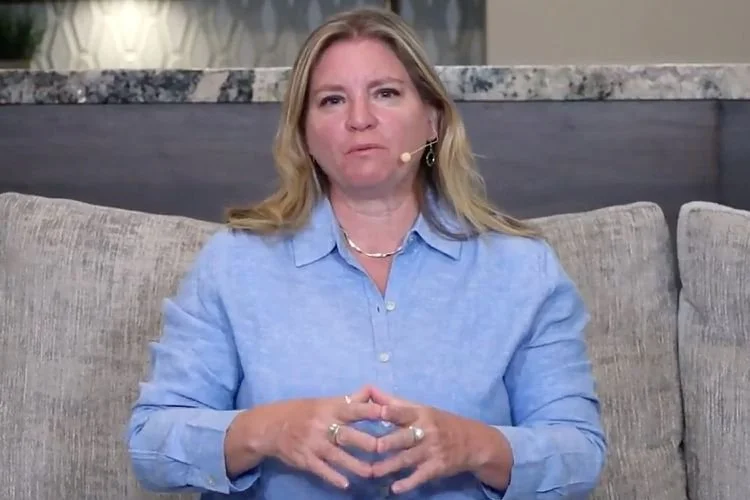
Photo of Jodi Hildebrant, People.com, CC BY-SA 2.5, via Wikimedia Commons
Beyond financial scams, there's a deeper concern about exploitative practices. A 2024 investigation by ProPublica and The Salt Lake Tribune found that approximately one-third of 43 Utah therapists whose licenses had been revoked, denied, or allowed to lapse since 2010 appeared to have continued working in the mental health field, often as life coaches (Miller, 2024). The investigation gained national attention following the 2023 conviction of Jodi Hildebrandt, a life coach sentenced to prison for child abuse connected to her coaching business (Netflix, 2024). Utah subsequently enacted legislation explicitly barring anyone without a professional therapy license from providing mental health treatment (Miller, 2025).
As someone who is fundamentally anti-multilevel marketing, anti-pyramid schemes, and more importantly, anti-coercive control, I find these patterns grossly unacceptable. Yes, this is a personal opinion, but it is based on lived experience and a professional judgment informed by clinical training and the clearly documented evidence above.
This is precisely why I chose a career path anchored in regulated, accountable frameworks. I chose training that began in classical music pedagogy, then business consulting, then certification in project management, then teaching in academia, then in-depth trauma resilience training, and then clinical mental health counseling (phew!). I went this route because I believe that clients deserve quality providers regulated by an external board that ensures evidence-based practice and training through peer-reviewed programs that support client security. The clinical, academic, and business frameworks within which Jupiter Pines operates are built on enforceable standards that ultimately protect clients in ways the coaching industry currently cannot.
Please do not misunderstand the vulnerability inherent in power imbalances.
Many coaches do excellent, meaningful, and very ethical work. However, the absence of professional regulation places the burden of vetting professionals onto a coaching client more heavily than it would in another, more regulated profession. This is particularly precarious when coaches work with populations prone to mental instability and symptoms that make clients vulnerable to suggestion (Caputo, 2025; Schermuly & Graßmann, 2018; Williams & O'Connor, 2019). This is a power imbalance worthy of care and recognition
Who Jupiter Pines Serves with Counseling & Coaching:
Our Specialized Populations At Jupiter Pines Counseling, we support clients through both counseling and coaching for the following areas and populations. Your choice between services depends on your needs, goals, and geographical location:
We affirm the following identities, communities, and unique lived experiences:
Life Stages & Roles:
Whether you engage in counseling, coaching, or both depends on your current needs, whether you require clinical documentation or diagnosis, and where you're physically located during sessions. Note: these are always separate engagements, never combined within the same appointment.
See yourself or someone you love on this list? Book a complimentary 20-minute consult to explore how we can help.
Frequently Asked Questions
What's the main difference between counseling and coaching?
The core difference comes down to education, training, regulation, and scope. Coaches operate in an unregulated industry with varying certification levels. Clinicians can diagnose and treat mental health conditions and provide legally protected documentation. Coaches focus on forward-looking, goal-oriented support without clinical authority.
Here’s the process for clinical mental health licensure in WA State, as of writing this post…To become a fully licensed clinical mental health counselor (LMHC), one must:
hold a master's degree in mental health counseling or a related behavioral science field (typically from a CACREP-accredited program, though equivalency pathways exist)
complete 3,000 supervised post-graduate hours
pay for and pass a national counselor's exam (e.g., NCE or NCMHCE)
pay for and obtain state licensure.
While a clinician works toward acquiring those 3,000 supervised hours, they’re usually considered a Licensed Mental Health Counseling Associate (LMHCA). To get this license, one must:
hold a qualifying master’s degree in mental health counseling or a related behavioral science field (typically from a CACREP-accredited program, though equivalency pathways exist)
provide evidence of completing a clinical practicum during graduate study
provide evidence of completing supervised internship hours during graduate study
pay for and obtain the associate state credential
Sources: (Washington State Department of Health, n.d.; American Mental Health Counselors Association, n.d.).
Can a coach also do therapy without a license?
No. In Washington State, providing mental health treatment without a license, including diagnosis, clinical assessment, or treatment of mental health conditions, constitutes unlicensed practice and violates RCW 18.225 (Washington State Legislature, n.d.). In Washington State, providing mental health treatment without a license can result in criminal charges. Many other states have similar laws (e.g., Utah). If a coach diagnoses or treats mental health conditions outside these legal frameworks, they risk violating criminal statutes in their jurisdiction.
How do I know if I need counseling or coaching?
If your challenges involve mental health symptoms, trauma processing, or require clinical documentation, start with counseling. If you're emotionally stable, clear-eyed about your goals, and looking for structured accountability and strategy, coaching may be a great fit.
If you’re still unsure? Book a 20-min consult; we'll help you figure it out without pressure and no-strings-attached.
Can I use both services simultaneously?
Not simultaneously within the same appointment. If you're interested in both services, these are separate services, separate engagements, and each is documented as such in your client records. For example, clinical documentation adheres to insurance standards and confidentiality statutes, while coaching records are governed by private contract terms. Depending on their life journey, some Jupiter Pines clients engage in both services concurrently within our practice, but each engagement remains a distinctly separate scheduled appointment with its own service agreement and documentation.
Will a Jupiter Pines clinician ever switch between counseling and coaching mid-session if something comes up?
No. If something arises during a coaching session that warrants clinical attention, we'll pause and discuss transitioning you to a separate counseling engagement. Similarly, if a Jupiter Pines Counseling client wants coaching-style goal work, we recommend scheduling a separate appointment for that work. Mixing the two in a single session compromises the integrity of documentation and ethical boundaries.
If you’re unsure which is the best fit for you, book a 20-min consult; we're happy to help you figure it out and answer any questions before making a selection.
What happens if I have upcoming travel plans that conflict with a telehealth counseling appointment?
You must disclose your physical location at the time of each session. Unless otherwise clarified in advance, your clinician must be licensed in your physical location, not in their own office. Hiding your travel can unknowingly put your clinician’s license and liability insurance at risk. We ask for transparency from our clients and can help arrange alternative, appropriately licensed support as needed.
Ready to Take the Next Step?
Whether you're looking for clinical support, coaching, or you're still figuring out which you need, we'd love to talk. Book your complimentary 20-minute consultation with Jupiter Pines Counseling today. Serving clients across Washington State and beyond, from our home base in Tacoma.
-
American Counseling Association. (2014). 2014 ACA Code of Ethics. Alexandria, VA: Author.
American Mental Health Counselors Association. (n.d.). Washington state LMHC and LMHCA. https://www.amhca.org/glossary/washington-lmhc-lmhca
Caputo, L. G. D. (2025). Power, interpersonal trauma, and the counseling relationship: A grounded theory analysis. Journal of Clinical Psychology. Advance online publication. https://doi.org/10.1002/jcad.70000
Federal Trade Commission. (2018, October 30). Listen in on how sellers pitched business "coaching" services [Blog post]. https://www.ftc.gov/business-guidance/blog/2018/10/listen-how-sellers-pitched-business-coaching-services
Federal Trade Commission. (2021, December). FTC returns additional $25 million to consumers who lost money to business coaching scam [Press release]. https://www.ftc.gov/news-events/news/press-releases/2021/12/ftc-returns-additional-25-million-consumers-who-lost-money-business-coaching-scam
Federal Trade Commission. (n.d.). Coaching Department refunds. https://www.ftc.gov/enforcement/refunds/coaching-department-refunds
Healthcare Providers Service Organization. (n.d.). Failure to differentiate between counseling and life coaching. https://www.hpso.com/Resources/Legal-and-Ethical-Issues/Case-Study-Failure-to-differentiate-between-counseling-and-life-coaching;-exceeding-conventional-co
International Coaching Federation. (n.d.). Referring a client to therapy. https://coachingfederation.org/resource/referring-a-client-to-therapy
LIFE Coaching Certification. (n.d.). Life coaching industry in 2026: Key trends & what they mean for new coaches. https://lifecoachingcertification.net/blog/life-coaching-trends-2026
Miller, J. (2024, March). When therapists lose their licenses, some turn to life coaching. ProPublica. https://www.propublica.org/article/utah-therapists-life-coaches-regulation
Miller, J. (2025, March 27). A new Utah law targets life coaches who offer unlicensed therapy. ProPublica. https://www.propublica.org/article/utah-life-coaches-mental-health-therapy-law
National Board of Certified Counselors. (2025). Counseling Compact: Interstate practice information. https://nbcc.org/compact
Netflix. (2024). Evil influencer: Jodi Hildebrandt [Documentary]. https://www.imdb.com/title/tt39049795/
Schermuly, C. C., & Graßmann, C. (2018). A literature review on negative effects of coaching: What we know and what we need to know. Coaching: An International Journal of Theory, Research and Practice, 11(2), 83–101. https://doi.org/10.1080/17521882.2018.1525702
The Seattle School of Theology & Psychology. (n.d.). Becoming licensed mental health counselor. https://theseattleschool.edu/blog/becoming-licensed-mental-health-counselor/
Washington State Department of Health. (n.d.). Mental health counselor: Licensing requirements. https://doh.wa.gov/licenses-permits-and-certificates/professions-new-renew-or-update/mental-health-counselor/licensing-requirements
Washington State Legislature. (n.d.). RCW 18.225: Mental health counselors, marriage and family therapists, social workers. https://app.leg.wa.gov/rcw/default.aspx?cite=18.225
Williams, I. L., & O'Connor, P. (2019). Power in the counseling relationship: The role of ignorance. Journal of Human Services: Training, Research, and Practice, 4(2), 1–37. https://scholarworks.sfasu.edu/jhstrp/vol4/iss2/3